From Blood Draw to Breakthrough: 2011 Fellow Aadel Chaudhuri Is Changing How We See Cancer
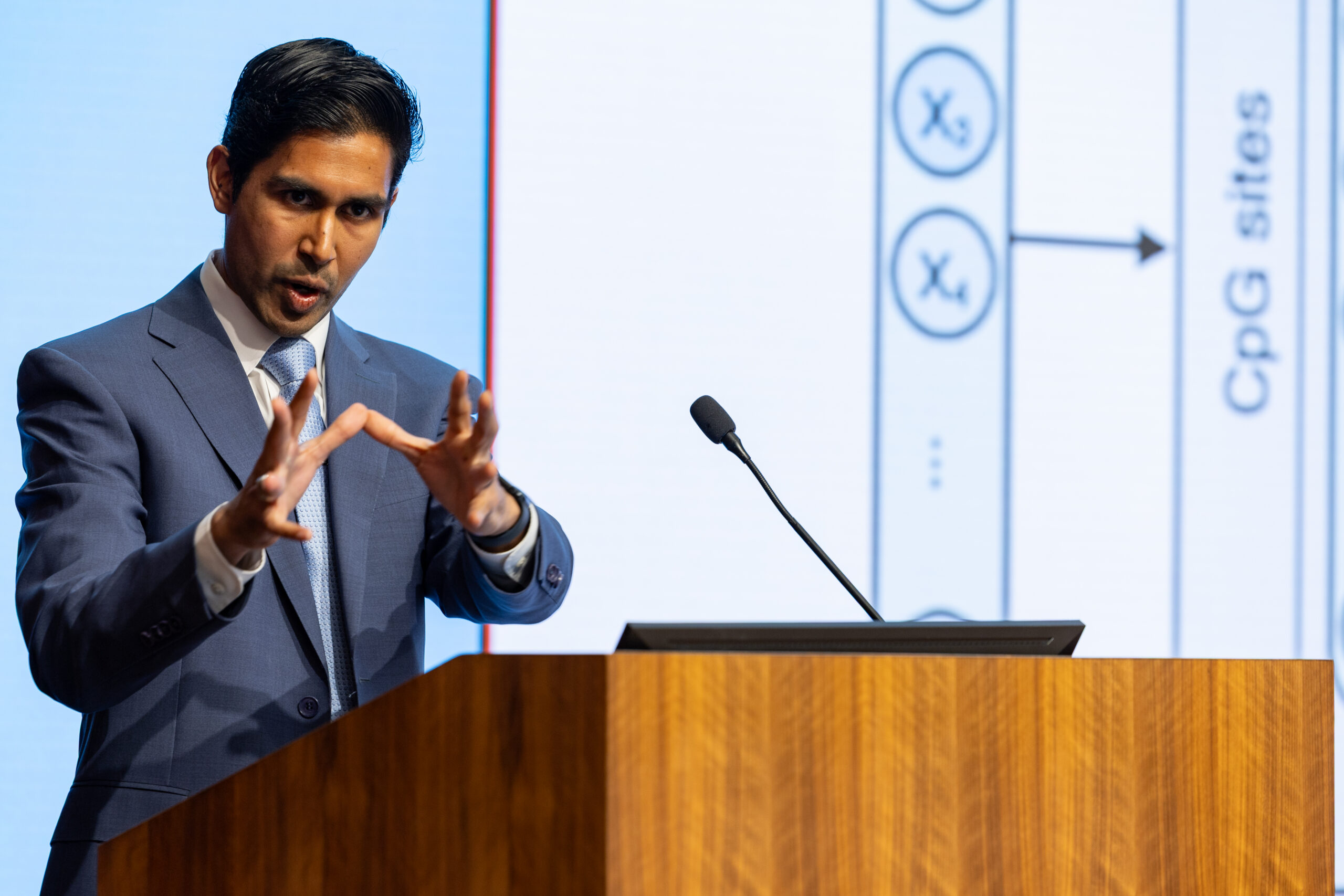
A Blood Test That Can See Inside a Tumor’s Hidden World
For decades, oncologists have faced a maddening problem: even the best tools for predicting whether a patient will respond to immunotherapy are imprecise. Tumor mutation burden, protein expression levels—these markers offer approximate signals at best. They describe the cancer cell, but not the complex ecosystem surrounding it. They are, as one researcher put it, “surrogates of surrogates.”
That may be about to change.
In a study published in Nature, researchers from Mayo Clinic and Stanford Medicine announced the development of the first blood test capable of mapping the tumor microenvironment—the dense, dynamic community of immune cells, structural cells, and molecular signals that surrounds a tumor and largely determines how it will respond to treatment. The test requires no surgery, no biopsy, no incision. Just a blood draw.
“This is a complete paradigm shift,” said Aadel Chaudhuri (2011 Fellow), professor and vice chair of radiation oncology at the Mayo Clinic. “Until now, liquid biopsies or blood tests have focused almost entirely on tumor cells. For the first time, we can use a simple blood test to understand the tumor’s microenvironment, which is critical for determining how patients respond to modern cancer therapies.”
Mapping what was invisible
The research team’s starting point was spatial transcriptomics, an advanced technique that maps how different cell types interact within a tumor. Analyzing samples across 17 cancer types, they identified nine distinct cellular neighborhoods—what they called “spatial ecotypes”—each representing a unique configuration of immune and noncancerous cells. Some cluster at the border between tumor and healthy tissue. Others are found deeper inside. And crucially, certain ecotypes are strongly associated with whether patients respond to immunotherapy or resist it.
The breakthrough was then making those neighborhoods visible from a blood sample. By analyzing chemical markings on fragments of tumor DNA that circulate in the bloodstream, Aadel’s team—working with Aaron Newman’s team at Stanford—built a liquid biopsy test that can detect these spatial patterns without touching the tumor itself. In studies involving more than 1,300 patients across melanoma, lung, bladder, and gastric cancers, the test outperformed standard biomarkers in predicting treatment outcomes.
The implications are immediate. Cancer treatment is time-consuming and carries real side effects. Knowing before treatment begins that a patient is unlikely to respond to immunotherapy could allow physicians to pivot to better-matched alternatives weeks or months sooner. “If a patient isn’t going to respond, that’s time we could be using a different treatment,” Aadel said. “Better upfront decision-making can directly improve outcomes.”
Because the test is blood-based, it also opens the door to something that has never been practically possible before: tracking how the tumor microenvironment changes over time during treatment. Early data suggest that shifts in spatial ecotypes can signal response or resistance months before traditional imaging would catch them.
“We’ve essentially uncovered a world that was invisible to us before,” Aadel said, “and now we can access it with a simple blood test.”
The physician-scientist behind the work
2011 Paul & Daisy Soros Fellow Aadel Chaudhuri has spent his career working toward exactly this kind of discovery—not from a single laboratory, but from the intersection of medicine, biology, and computation that has defined his path since college.
At MIT, where he earned degrees in biology and computer science with a minor in biomedical engineering, he competed on the varsity lightweight rowing team and worked in the laboratory of Nobel Laureate Phillip Sharp. At Caltech, he completed his PhD in biology under Nobel Laureate David Baltimore, focusing his doctoral research on microRNAs in cancer. His formation as a scientist ran through two of the most rigorous research environments in the world.
His formation as a physician came at Stanford, where he completed his MD and residency and served as chief resident in the Department of Radiation Oncology. It was there, working with National Academy of Medicine member Maximilian Diehn, that Aadel led a study demonstrating that circulating tumor DNA could serve as a powerful biomarker for detecting molecular residual disease after curative-intent lung cancer treatment. That paper, published in Cancer Discovery, is now considered foundational in the field—a direct precursor to the work his laboratory pursues today.
That laboratory, at the Mayo Clinic in Rochester, Minnesota, is where Aadel serves as principal investigator of the Liquid Biopsy and Immunogenomics Laboratory and enterprise-wide codirector of the Cancer Precision Medicine Office at the Mayo Clinic Comprehensive Cancer Center. Funded by the National Cancer Institute, the National Institute of General Medical Sciences, the Children’s Tumor Foundation, the Prostate Cancer Foundation, and the Melanoma Research Alliance, his team focuses on developing liquid biopsy technologies to personalize solid tumor treatment and detect cancer earlier. His research has been cited more than 18,000 times.
He is also active in the biotechnology sector, having cofounded multiple startup companies in the liquid biopsy space—a reflection of his belief that discoveries made in the laboratory need pathways into the clinic and the marketplace to reach patients.
Keep Exploring
-
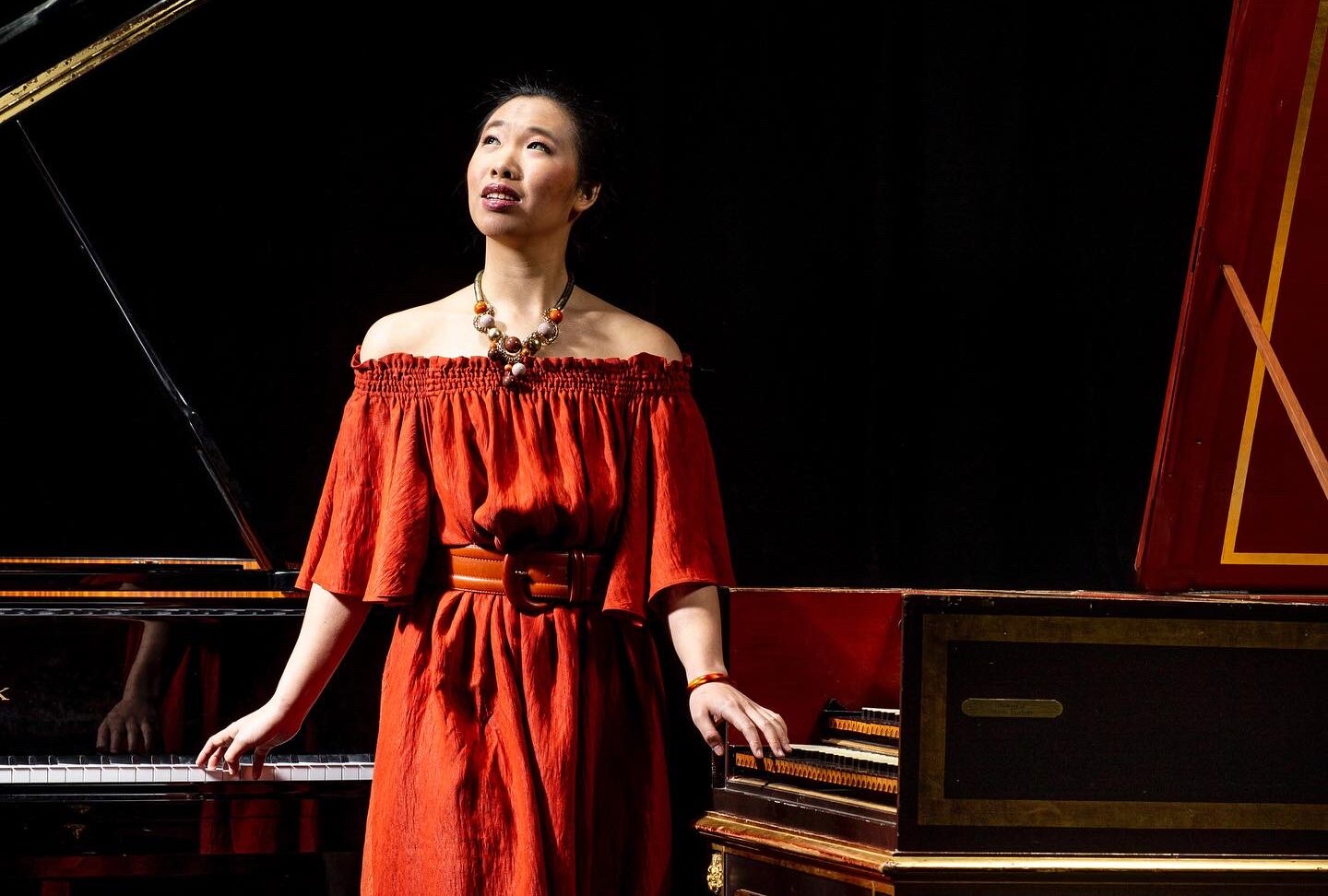 Read more: PD Soros Fellow Hilda Huang: A Voice Across Centuries
- Fellow Highlights
PD Soros Fellow Hilda Huang: A Voice Across Centuries
-
 Read more: Musicians: Applying for the PD Soros Fellowship
- Applicant Information
- Fellow Highlights
- Music
Musicians: Applying for the PD Soros Fellowship
-
 Read more: Writers: Applying for the PD Soros Fellowship
- Applicant Information
Writers: Applying for the PD Soros Fellowship
-
 Read more: Q&A: JD Student Ananya Agustin Malhotra Looks Back At The Fellowship
- Fellow Highlights
Q&A: JD Student Ananya Agustin Malhotra Looks Back At The Fellowship