- Fellow Highlights
Q&A: Francisca Vasconcelos Looks Back At The Fellowship
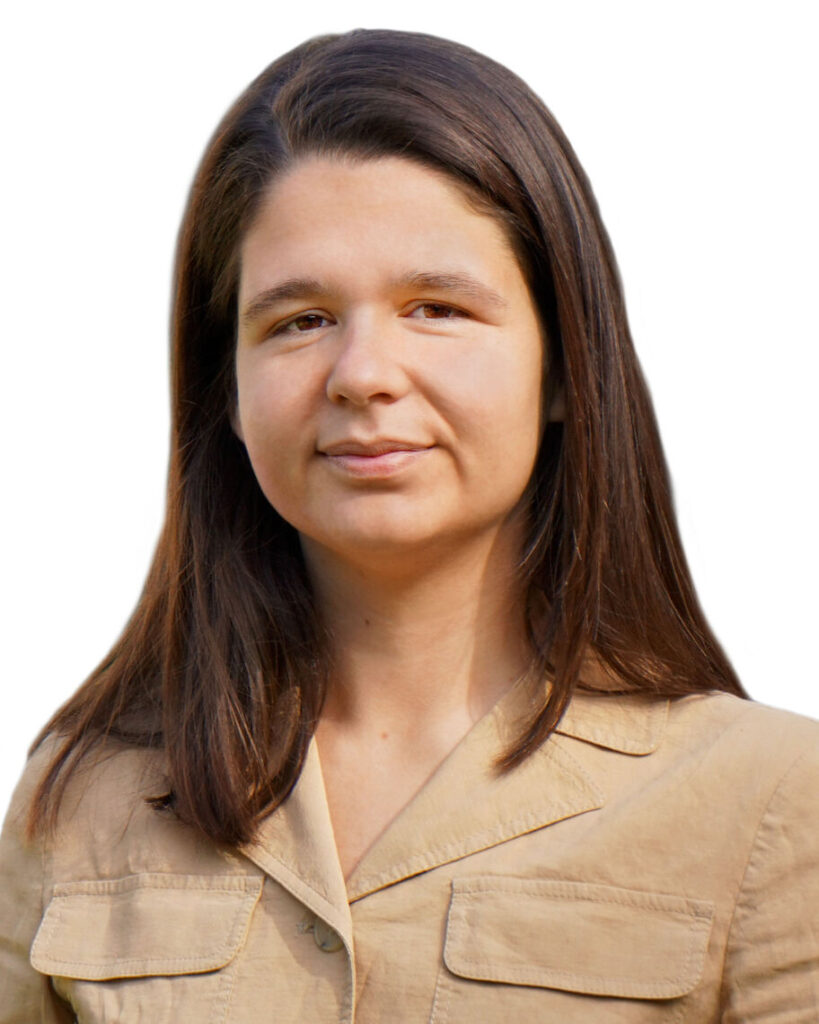
Francisca Vasconcelos is a 2024 Paul & Daisy Soros Fellow and the daughter of Portuguese immigrants. Her parents’ journey as PhD students, along with their passion for academic discovery, inspired Francisca to build her own path in research and education.
Francisca became captivated by the intersection of quantum computation and machine learning because of its potential to outperform classical computers and improve our understanding of physics and chemistry. While studying electrical engineering, computer science, and physics at MIT, she pursued her passion for education and research by performing data analysis for quantum computers and serving as the founding academic director of the nonprofit initiative Qubit x Qubit, where she taught the fundamentals of quantum computing to thousands of students worldwide. Francisca is pursuing a PhD in computer science at the University of California, Berkeley.
You are the child of immigrants; how has that experience shaped the questions you ask in your work or the way you move through the world?
Growing up as a child of immigrants meant I never truly fit in. Being raised in a Portuguese household, I never fully felt American. However, spending only a few weeks a year in Portugal and not fluently speaking the language also meant I never fully felt Portuguese. Growing up at the intersection of these two cultures led me at a young age to question both cultures, but also allowed me to embrace the aspects of each that I truly connected with. It caused me at a young age to grapple with notions of identity and set my own path that I think set the stage for the sort of independent thinking that I embrace in my own scientific endeavors.
What drew you to the field or path you’re pursuing? Was there a moment when you knew this was the right direction?
In highschool, I watched a YouTube video about quantum computing that really caught my attention. When I started my undergrad at MIT, I thought I was just going to do computer science and machine learning, but my freshman year I took the mandatory physics courses and really enjoyed them. I also took a short introduction to quantum computing course in my freshman year that I absolutely loved and I became obsessed with everything quantum. That was when I knew that quantum computing was what I wanted to do and I dedicated a significant portion of my later undergraduate years to research in the field to begin my quantum computing research journey.
What’s something about your background that people might not expect has influenced your work or thinking?
Prior to the PhD I did my undergrad in applied electrical engineering, computer science, and physics. I also did a masters in philosopy of physics. Switching into theoretical computer science for the PhD, my previous experiences in these diverse fields has led me to explore non-standard research directions that combine my interests and desire to have a practical impact.
What question or problem is at the center of your work right now? How would you explain it to someone outside your field?
Now that small-scale fault-tolerant quantum computers seem like they will probably be practically realized within the decade, the major question of the field is what we will use them for. To this end, my PhD research has focused on finding provable sources of “quantum advantage”, i.e. mathematically proving that there are certain tasks that a standard quantum computer could perform substantially faster than even the world’s largest classical super-computers.
How has your thinking about your work evolved over the past two years? What are you asking now that you weren’t asking when you started?
Having switched from an applied background into more theoretical work for my PhD, a large part of the first years of my PhD was spent learning how to do theoretical research and explore various aspects of quantum complexity. Although two years ago my research direction was largely focused on proving complexity motivated no-go results (i.e. lower-bounds), over these two years, my focus has shifted more-so to algorithms and demonstrating things quantum computers can actually do (i.e. upper-bounds). Specifically, I transitioned from trying to understand the limitations of certain classes of shallow-depth quantum computation to now trying to understand their power and sources of quantum advantage.
What did the Fellowship give you that you didn’t expect?
The Paul and Daisy Soros Fellowship is much more than a source of funding, but a true community. The PD Soros Fall Conference weekends were an absolute blast and true highlights of my entire PhD experience. There were so many fun activities and it was such an incredible experience getting to connect with incredible PD Soros Fellows from such diverse disciplines and walks of life. It was also the first time I felt truly understood and seen as a first generation American.
Is there a moment from the past two years—a conversation, an event, a realization—that has stayed with you?
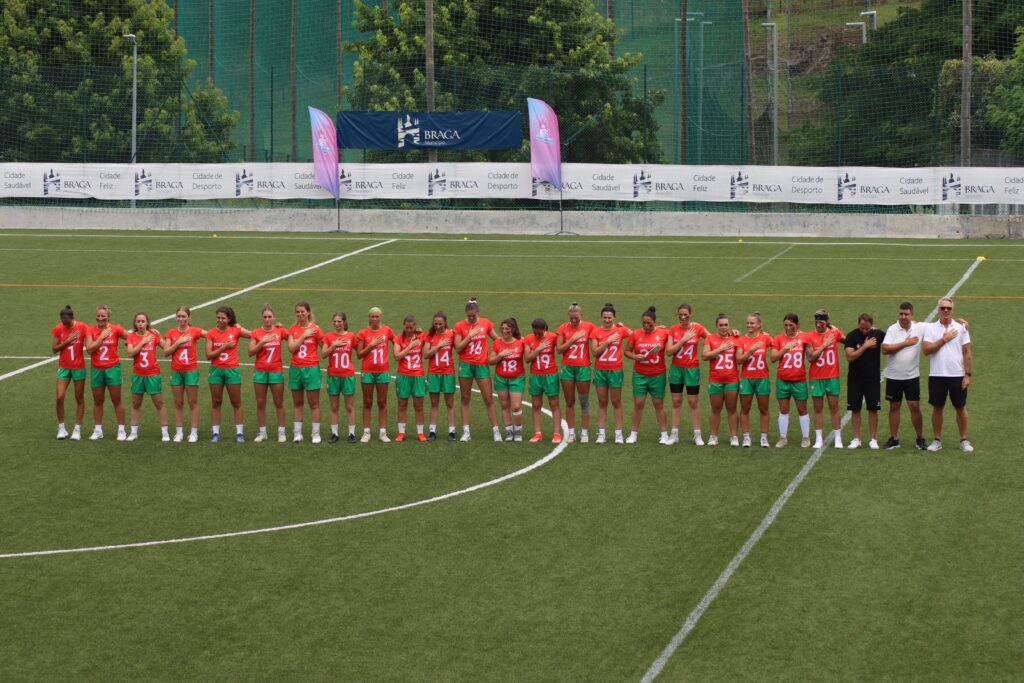
In the first summer of the PD Soros Fellowship, I had an incredible opportunity to go to Europe and connect with my Portuguese heritage through my love of sports. I went to trials for the Portuguese national lacrosse team in Lisbon and ended up playing in the Women European Lacrosse Championships in Braga, just outside my family’s home city Porto. Between the trials and championship I also flew to Germany to join the Portuguese national team ultra-fans in rooting for the men’s football team in the EuroCup. I got to watch Portugal take on both Slovenia and France in the Round of 16 and quarter finals, with Portuguese friends. It was an incredible experience and my first time getting to watch the Portuguese national team, which was a lifelong dream of mine!
Keep Exploring
-
 Read more: PD Soros Fellow Hilda Huang: A Voice Across Centuries
- Fellow Highlights
PD Soros Fellow Hilda Huang: A Voice Across Centuries
-
 Read more: Musicians: Applying for the PD Soros Fellowship
- Applicant Information
- Fellow Highlights
- Music
Musicians: Applying for the PD Soros Fellowship
-
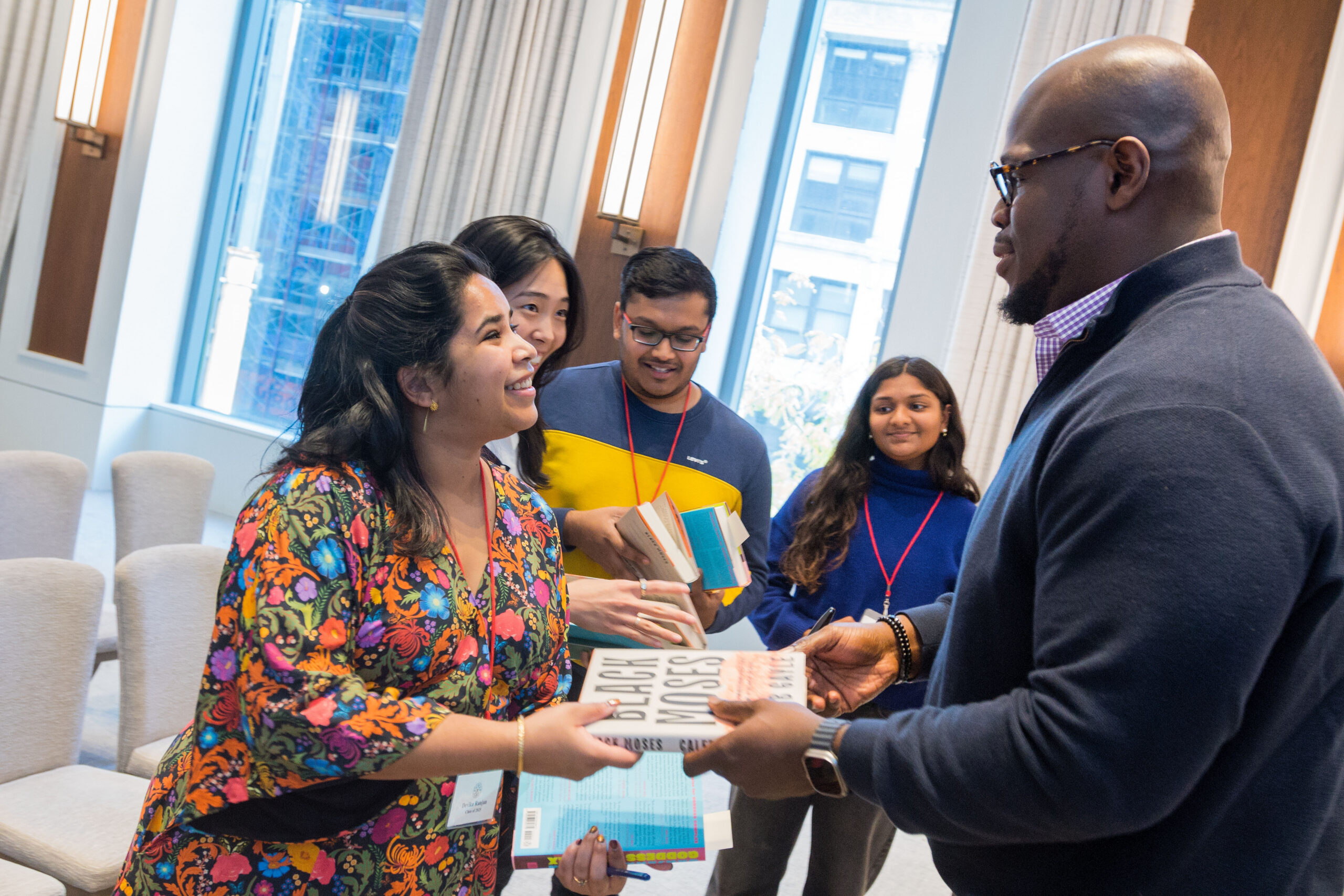 Read more: Writers: Applying for the PD Soros Fellowship
- Applicant Information
Writers: Applying for the PD Soros Fellowship
-
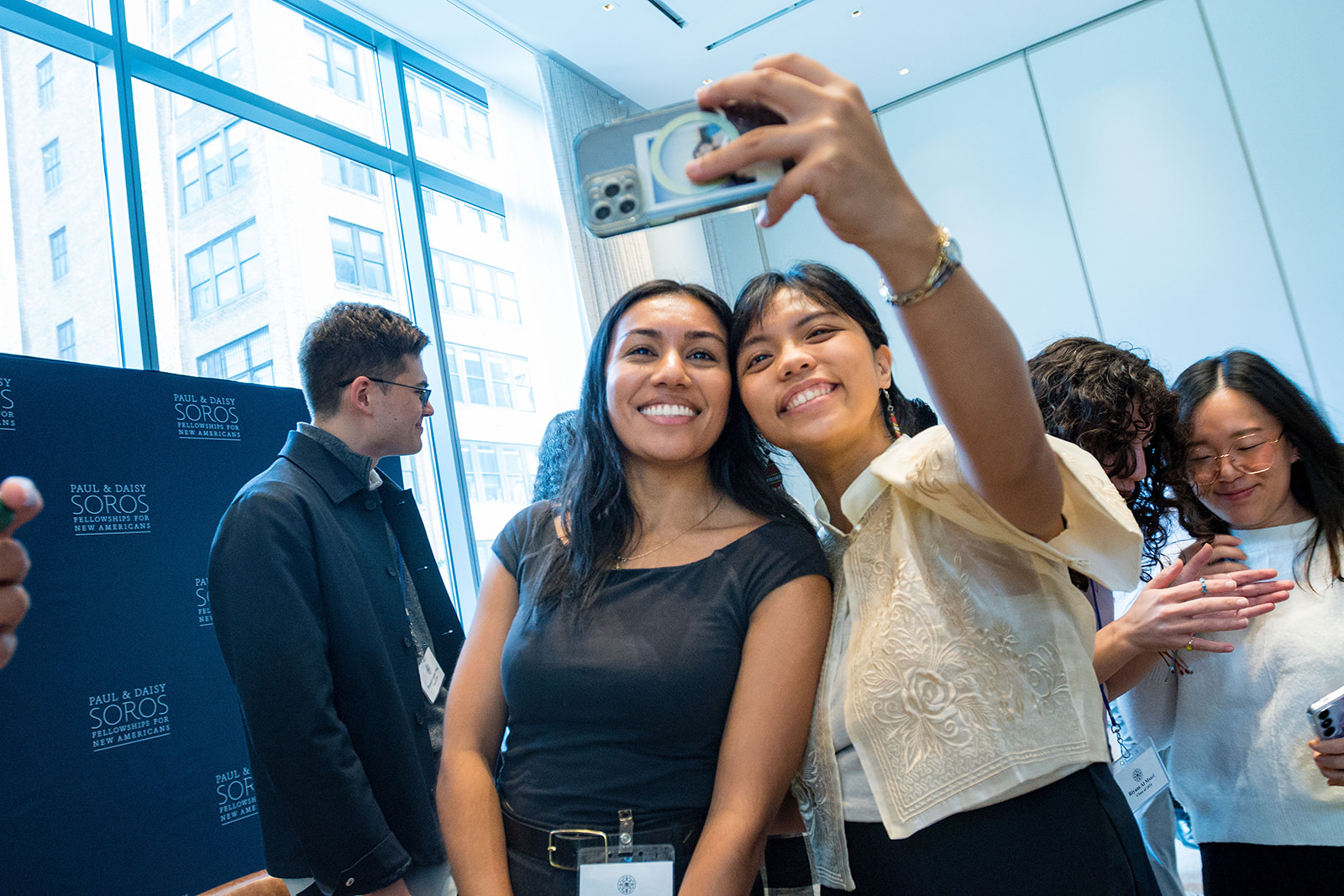 Read more: Q&A: JD Student Ananya Agustin Malhotra Looks Back At The Fellowship
- Fellow Highlights
Q&A: JD Student Ananya Agustin Malhotra Looks Back At The Fellowship