- Fellow Highlights
Q&A: Computational Researcher Aayush Karan Looks Back At The Fellowship
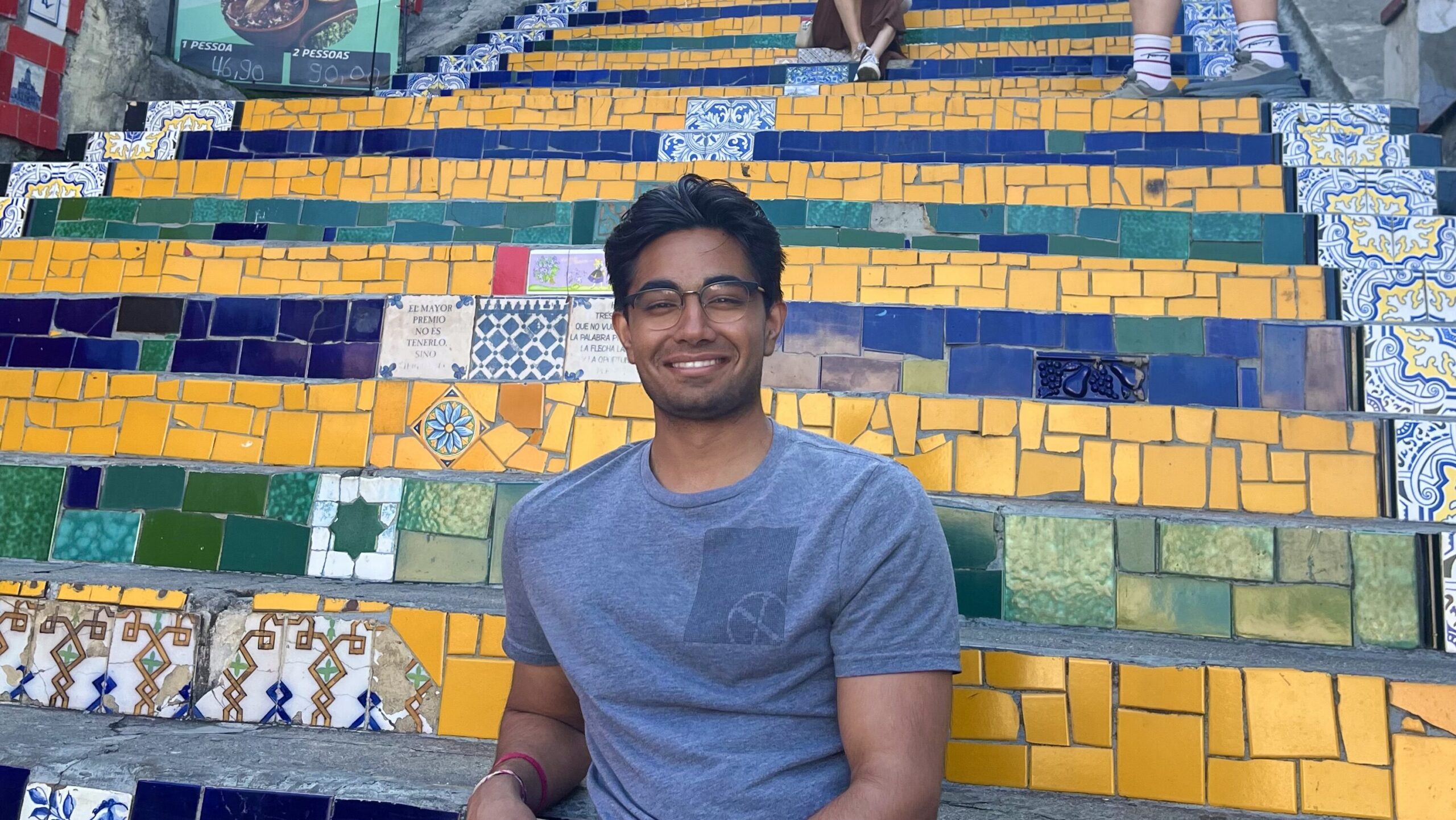
Aayush Karan is a 2024 Paul & Daisy Soros Fellow and the child of immigrants from India. From bedtime Indian folk tales to fantasy novels, to his own parents’ journeys, stories were a central feature of Aayush’s life, compelling him to pursue many avenues of storytelling growing up, including classical piano and creative writing. His parents’ wholehearted encouragement of these pursuits along with their intense devotion to impactful research fostered a keen desire to establish meaningful relevance to broader audiences and communities—something that has strongly guided Aayush’s passion for scientific research.
Aayush became captivated by mathematics and computation because of their power to address highly relevant scientific applications. While studying computer science, physics, and mathematics at Harvard, he pursued his passion for research by publishing work in low-dimensional topology, designing folding algorithms for RNA sequences, and developing compilers for optimization problems on near-term quantum devices as a Barry Goldwater Scholar. Aayush is pursuing a PhD in Computer Science at Harvard University.
How has the experience of being the child of immigrants shaped the questions you ask in your work or the way you move through the world?
My parents always stressed the importance of contributing to a purpose greater than the self–my dad especially, as he immigrated to the US to pursue cancer research. The pervasiveness of this throughout my time growing up has thoroughly influenced the kinds of questions I ask myself now: what is the real value output of what I’m doing, and who is it for? Will it matter in 5, 10, 15 years? What is the broadest extent of people that will find it impactful?
What drew you to the field or path you’re pursuing? Was there a moment when you knew this was the right direction?
I took quite the winding path, starting from pure mathematics going to computational biology and theoretical physics, finally ending up where I am now, doing research that develops algorithms that seek to meaningfully enhance the capabilities of modern artificially intelligent systems. For me, my research strikes the perfect balance between exploring theoretically rich, principled ideas and engineering algorithms that work ‘in real life’ and are directly relevant to frontier research. The best example of this is a recent project I was fortunate enough to work on, where we offered a fresh new perspective on the ‘reasoning’ capabilities that are present in large language models, stylistically invoking a very math/physics-esque framework. Seeing this lead to a new approach that enabled models to reason on par with frontier algorithms on math/coding/science tasks was incredibly gratifying.
What’s something about your background that people might not expect has influenced your work or thinking?
Storytelling was a big part of my childhood, whether it was my dad telling me folk tales at bedtime or I was rampaging through fantasy novels at my local library. Largely thanks to this, storytelling is at the forefront of my mind when it comes time to package my research into a paper and present it to the broader community. I want to write something I would want to read, so it better be a good story: something that is grounded in the context of a broad, fundamental question anyone can find interesting, with results and discoveries that feel as if they unfold naturally as part of the narrative.
How has your thinking about your work evolved over the past two years? What are you asking now that you weren’t asking when you started?
When I first started my PhD, I expected to be working a lot more on “theory-first” projects in machine learning: i.e., is there some capability or phenomenon that models exhibit which we can mathematically prove in a well-structured environment? Lately, my work has increasingly become “empirics-first”: searching for principled algorithms that work extremely well in practice (i.e. making models reason or learn better) and then using theoretical tools to momentarily pause and offer a satisfying and instructive reason as to why.
How do you describe the Paul & Daisy Soros Fellowships for New Americans to someone who hasn’t heard of it?
The PD Soros Fellowship gave me the opportunity to build really strong friendships with amazingly talented people across the country and share deeply personal reflections bound by the commonality of our association as New Americans. Having these connections with people across wildly varying disciplines has added truly rich depth to my graduate experience, and I am so grateful that regardless of wherever I end up going post graduation, there will likely be a community of PD Soros Fellows awaiting me there.
Is there a moment from the past two years—a conversation, an event, a realization—that has stayed with you?
The karaoke event at this past PD Soros Fall Conference for me was a great culmination of how warm and community-oriented the Fellowship is. Getting to bond with other PD Soros Fellows over our favorite music and witnessing how light-hearted and friendly everyone is beyond their phenomenal achievements and ambitions was truly a memorable experience.
What’s next for you? What are you working toward in the next few years?
I just finished my 3rd year as a PhD student, and am working on finishing my dissertation work in the next few years. There are two foundational questions in artificial intelligence I am primarily focused on: a) how do we understand the full extent of capabilities of existing models? and;f b) how do we introduce fundamentally new behaviors to these models? I hope that my work will be able to introduce a set of principled algorithms tackling these questions that can push the frontier of capabilities of even the best models that exist today.
Is there a problem in the world you most want to contribute to solving? What gives you hope that it’s solvable?
A lot of breakthroughs and sheer compute effort have been expended to get artificial intelligence to where it is now, where it is capable enough to seamlessly simulate language and even offer expertise at the level of highly skilled people, especially in mathematics and computer science. While this framing seems to place artificial intelligence in direct competition with us, the end state I am hopeful for is one where AI helps us accomplish fundamentally difficult tasks far beyond the reach of our best experts alone. In this so called ‘hard problem regime’, when it comes to designing novel drugs to cure diseases, operating autonomously in dangerous physical environments, or discovering new mathematics, the current paradigm of providing an immense amount of supervision from human capabilities doesn’t really apply anymore. The playbook for this regime is not at all clear, which makes me most excited to hopefully contribute towards.
What would you want a newly selected PD Soros Fellow to know going in?
The PD Soros Fellowship is an incredibly warm and welcoming place to be, so don’t be nervous! The best way of getting the most out of the fellowship is being proactive about making an effort to connect with the rest of the community.
What advice would you give to an applicant who is on the fence about applying?
The PD Soros Fellowship experience is uniquely extraordinary and something you should 100% give your best shot at! Apart from the obvious financial benefits, the community I’ve been able to be a part of and the friends I’ve made as a fellow have paid the small cost of writing two essays and four emails a hundred times over.
Keep Exploring
-
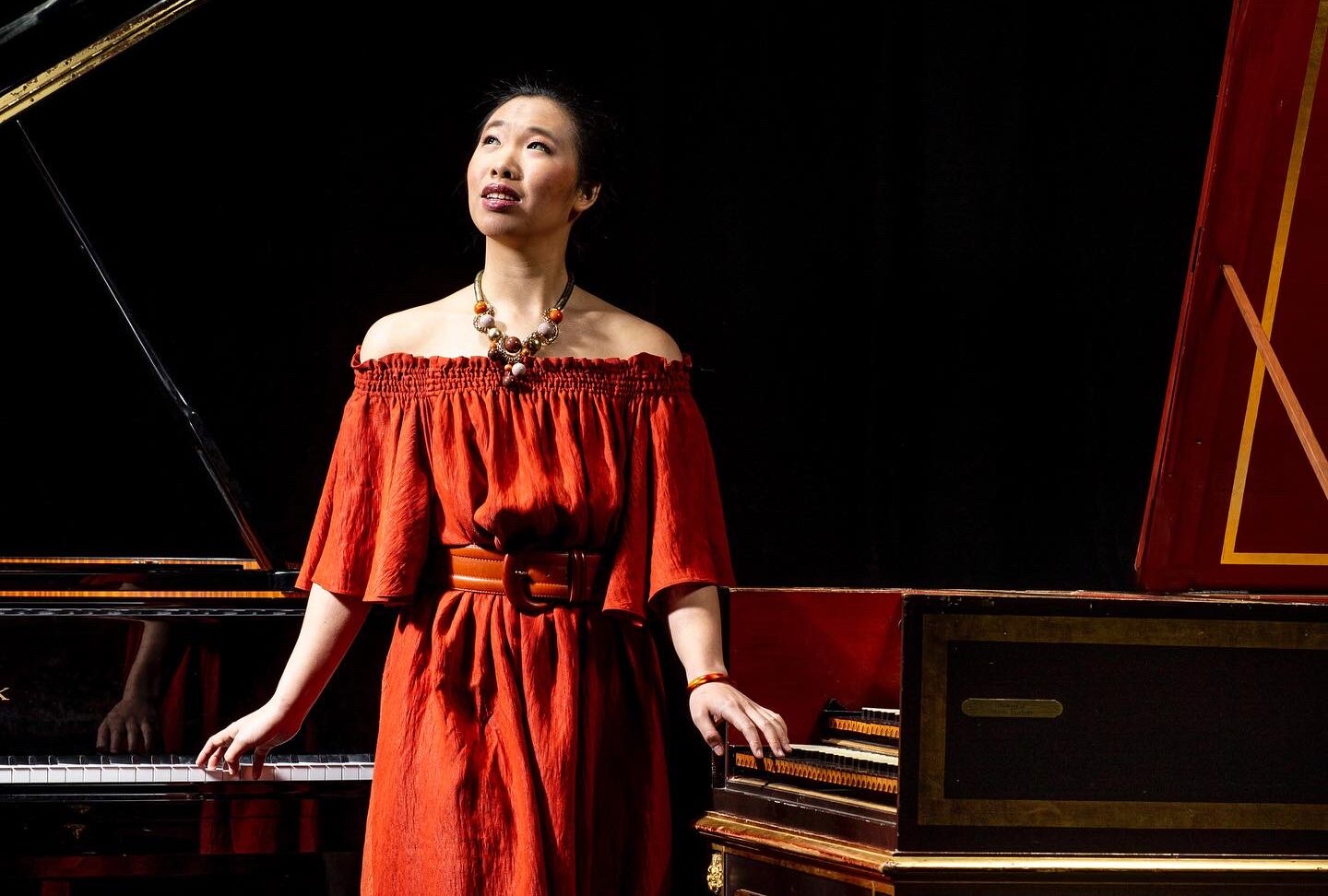 Read more: PD Soros Fellow Hilda Huang: A Voice Across Centuries
- Fellow Highlights
PD Soros Fellow Hilda Huang: A Voice Across Centuries
-
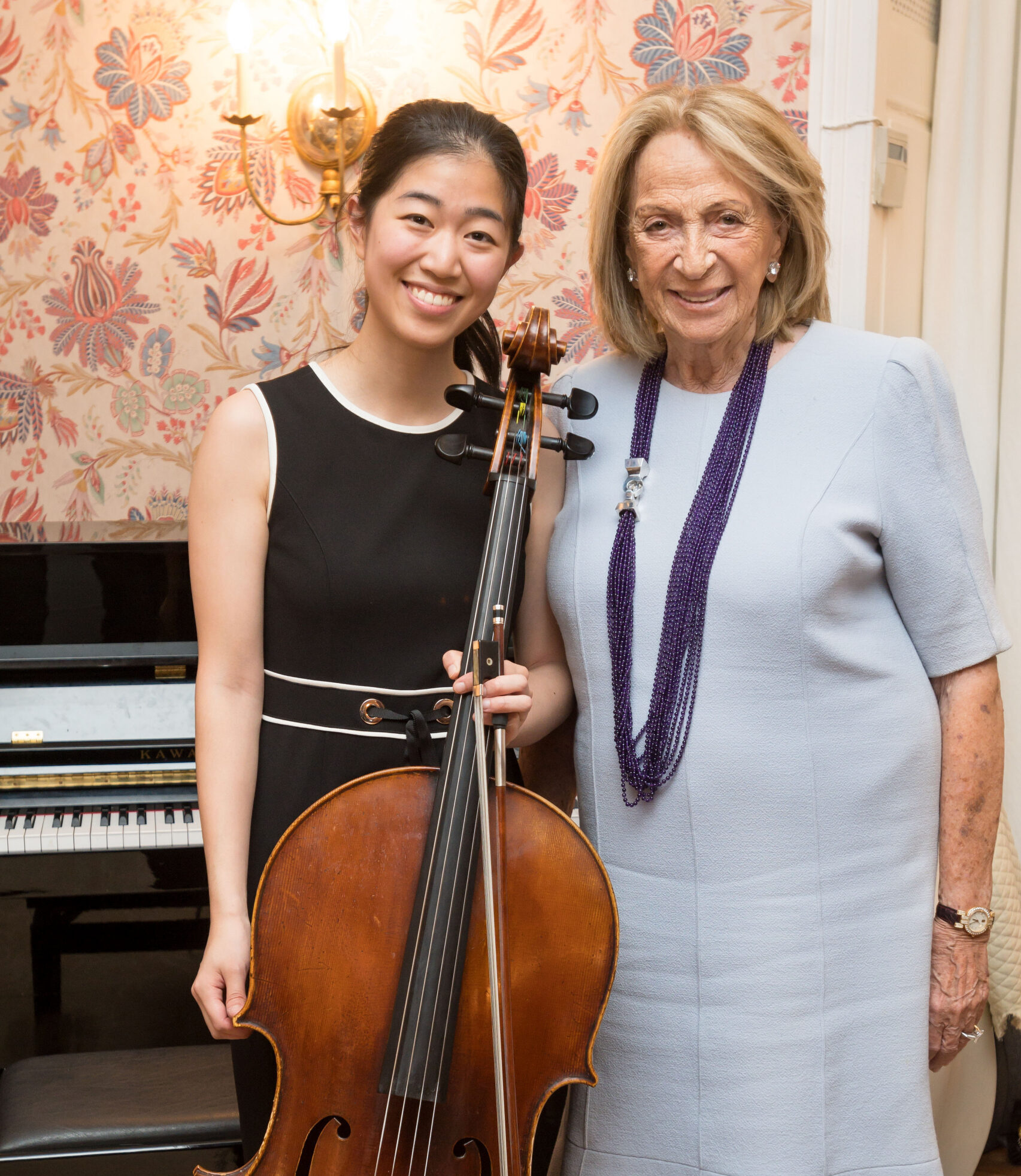 Read more: Musicians: Applying for the PD Soros Fellowship
- Applicant Information
- Fellow Highlights
- Music
Musicians: Applying for the PD Soros Fellowship
-
 Read more: Writers: Applying for the PD Soros Fellowship
- Applicant Information
Writers: Applying for the PD Soros Fellowship
-
 Read more: Q&A: JD Student Ananya Agustin Malhotra Looks Back At The Fellowship
- Fellow Highlights
Q&A: JD Student Ananya Agustin Malhotra Looks Back At The Fellowship