- Fellow Highlights
Q&A: MIT Biological Engineering PhD Student Riyam Al Msari Looks Back At The Fellowship
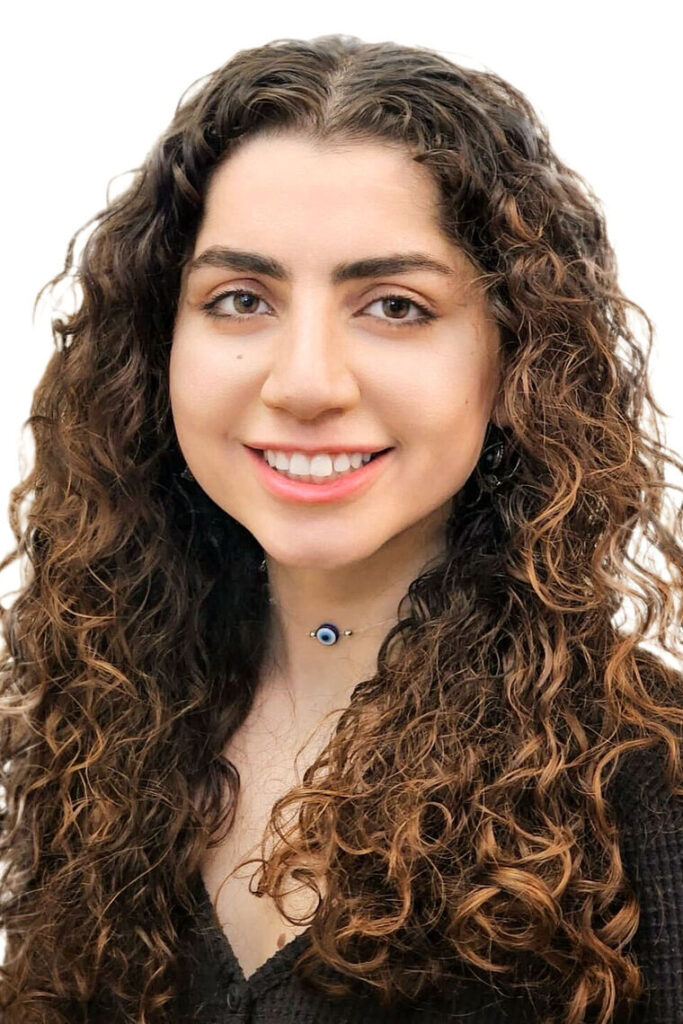
Riyam Al Msari is a 2024 Paul & Daisy Soros Fellow and an immigrant from Iraq. After immigrating to the United States with her family, she served as her mother’s primary caregiver during a battle with head and neck cancer. Her realization of the limitations and collateral damage caused by standardized cancer therapies, which left her mother in a compromised state, invigorated Riyam’s determination to pioneer translational cancer-targeted therapies.
Riyam became captivated by bioengineering because of its potential to employ engineering strategies for localized immune targeting of cancers. While studying bioengineering at UC San Diego, she pursued her passion for research and clinical translation by identifying the crucial role of tumor-draining lymph nodes in head and neck cancers, co-authoring several journal publications, and collaborating with industry partners to observe the systemic toxicity associated with immunotherapies. Riyam is pursuing a PhD in biological engineering at the Massachusetts Institute of Technology (MIT).
You came to the US as an immigrant. How has that experience shaped the questions you ask in your work or the way you move through the world?
Coming to the US at 20 with little knowledge of how to navigate life here, I found curiosity to be my most powerful tool for survival and connection. Asking “how” and “why” became a habit that opened doors to understanding people and concepts in my work and personal life. Leading with curiosity rather than assumption deepens your self-understanding, makes others feel seen, and makes the world a little more legible for everyone.
What drew you to the field or path you’re pursuing? Was there a moment when you knew this was the right direction?
While I began my academic journey in dental school in Iraq, my mother’s battle with cancer redirected my path entirely. Witnessing firsthand the limitations and collateral damage of therapies that indiscriminately target healthy and cancerous cells made my direction clear: I wanted to develop treatments that precisely target cancer cells while sparing healthy tissues. This motivation has driven every career decision I’ve made since.
What’s something about your background that people might not expect has influenced your work or thinking?
Most people are surprised to learn that I speak four languages. But in reality, I was never naturally gifted at languages; I just refused to stop until I got there. That is the same mentality that brought me from Iraq to the United States then MIT, through every failure and obstacle along the way. I have learned that if you keep working hard enough, improvement is inevitable, and that belief has given me the confidence to take on things that feel impossible.
What question or problem is at the center of your work right now? How would you explain it to someone outside your field?
Cytokines, the molecules the immune system uses to fight viruses, fight cancer, or trigger allergic responses, are pleiotropic: the same cytokine can have different, even opposing, effects depending on which cell type it acts on. In the cancer context, this means a cytokine capable of reawakening an immune response against a tumor can also act on the wrong cells, causing systemic side effects that limit how much can safely be given. My work focuses on engineering these cytokines so that they act selectively on the cell types where their effect is beneficial, restricting their activity to the right context rather than letting their natural pleiotropy work against us.
How has your thinking about your work evolved over the past two years? What are you asking now that you weren’t asking when you started?
When I started, I had the ambition to make a significant, field-defining contribution on my own. I’m more realistic now about what a single project, or even a single PhD, can reasonably accomplish, and I’ve come to see my work as one piece of a much larger, collective effort rather than a singular breakthrough. That shift hasn’t diminished my ambition for the field as a whole; it has just made me more deliberate about what my specific contribution can be, and more comfortable with “good enough to move things forward” as a meaningful standard, rather than holding out for the one perfect answer.
What’s a failure, setback, or detour that ended up mattering more than you expected?
A recent setback was realizing, partway through juggling multiple research projects, a startup, and several creative and athletic pursuits, that doing more wasn’t bringing me closer to my goals; it was just leaving me stretched thin with no clear sense of progress. The harder moment was an honest conversation with my advisor, where I chose to step away from one project entirely, which created real tension in the short term but came from being transparent about what I could realistically contribute. What I didn’t expect was how much that subtraction would matter: the redirected focus led to faster, more meaningful progress everywhere else, and taught me that clarity, honest communication, and disciplined choices, not sheer effort, are what actually move work forward.
How do you describe the Paul & Daisy Soros Fellowships for New Americans to someone who hasn’t heard of it?
The Paul & Daisy Soros Fellowship supports graduate students who are immigrants or children of immigrants, recognizing that the experience of building a life and a career in a new country shapes how you see the world and the work you do. Beyond the funding, it’s a community of people whose paths, while different in their details, share that same throughline, which makes it a place where your experience feels less like an exception and more like something genuinely understood. It’s the rare kind of community where you feel like people actually have your back.
What did the Fellowship give you that you didn’t expect?
What the Fellowship gave me that I didn’t expect was the realization that I don’t have to figure everything out on my own. Without an extended family network, and with parents who, while supportive, aren’t able to guide me through career decisions in this country, I had grown used to navigating things independently. Through the Fellowship, I found a community of people I can turn to for guidance, who understand the specific challenges of building a career here without that built-in support system.
Is there a moment from the past two years—a conversation, an event, a realization—that has stayed with you?
A moment that has stayed with me was the alternative of the “what’s not on your resume” exercise at the second PD Soros Fall Conference where we each wrote down five things we want for our future. It stuck with me because it solidified the realization that we’re allowed to self-actualize and look toward the future, while still being at peace with the past that brought us here.
What’s a friendship or connection from the Fellowship that has meant something to you?
At our Boston dinner in 2024, Craig Harwood brought Fernanda De La Torre over from the other side of the restaurant and told us we needed to get to know each other. Since then, Fernanda and I have shared coffee meetups, hot yoga classes, cooking with friends, small concerts, and even a week camping together in the desert.
What’s next for you? What are you working toward in the next few years?
Over the next few years, I’m working toward a more stable life that reflects what I value most: authenticity, connection, and adventure. Whatever form that takes professionally, I want to be present for the people I love, contribute positively to the people and communities around me, and continue showing up with kindness.
What does success look like to you—in your work, and more broadly?
I honestly stopped defining my life with the idea of “success.” There are so many versions of success, and those versions shift over time. So instead of chasing a defined outcome, I try to give my best, stay aligned with my core values, and trust that I’ll find something meaningful and contribute meaningfully wherever life takes me.
Is there a problem in the world you most want to contribute to solving? What gives you hope that it’s solvable?
I’m starting to become more aware of how animals are treated in industrial handling and slaughter systems. I admire a friend whose robotics background has them looking for opportunities to build systems that make this process more humane, and I’m still exploring how I might contribute to that with the skills I have. What gives me hope is that this isn’t a problem that requires changing human nature or waiting on some shift in values; it’s largely a question of designing better systems, and that’s something engineering and robotics are already capable of doing.
What would you want a newly selected PD Soros Fellow to know going into the Fellowship?
If you come from a difficult past and haven’t yet sat down with it, this process will bring it to the surface, and that can be hard. But it’s also an opportunity: a safe space to face those experiences and finally let them go. For me, this Fellowship has been one of the hardest, and ultimately one of the most rewarding, experiences of my life.
What advice would you give to an applicant who is on the fence about applying?
I’d say the application process itself is worth it regardless of the outcome. Writing these essays forces a kind of reflection you don’t often make time for: where you’ve come from, what you actually value, and where you’re trying to go. Even if you’re not selected, you walk away with a clearer sense of your own story, and that’s valuable on its own.
Keep Exploring
-
 Read more: PD Soros Fellow Hilda Huang: A Voice Across Centuries
- Fellow Highlights
PD Soros Fellow Hilda Huang: A Voice Across Centuries
-
 Read more: Musicians: Applying for the PD Soros Fellowship
- Applicant Information
- Fellow Highlights
- Music
Musicians: Applying for the PD Soros Fellowship
-
 Read more: Writers: Applying for the PD Soros Fellowship
- Applicant Information
Writers: Applying for the PD Soros Fellowship
-
 Read more: Q&A: JD Student Ananya Agustin Malhotra Looks Back At The Fellowship
- Fellow Highlights
Q&A: JD Student Ananya Agustin Malhotra Looks Back At The Fellowship