- Fellow Highlights
Q&A: MIT Computational Biology PhD Student Zijian (William) Niu Looks Back At The Fellowship
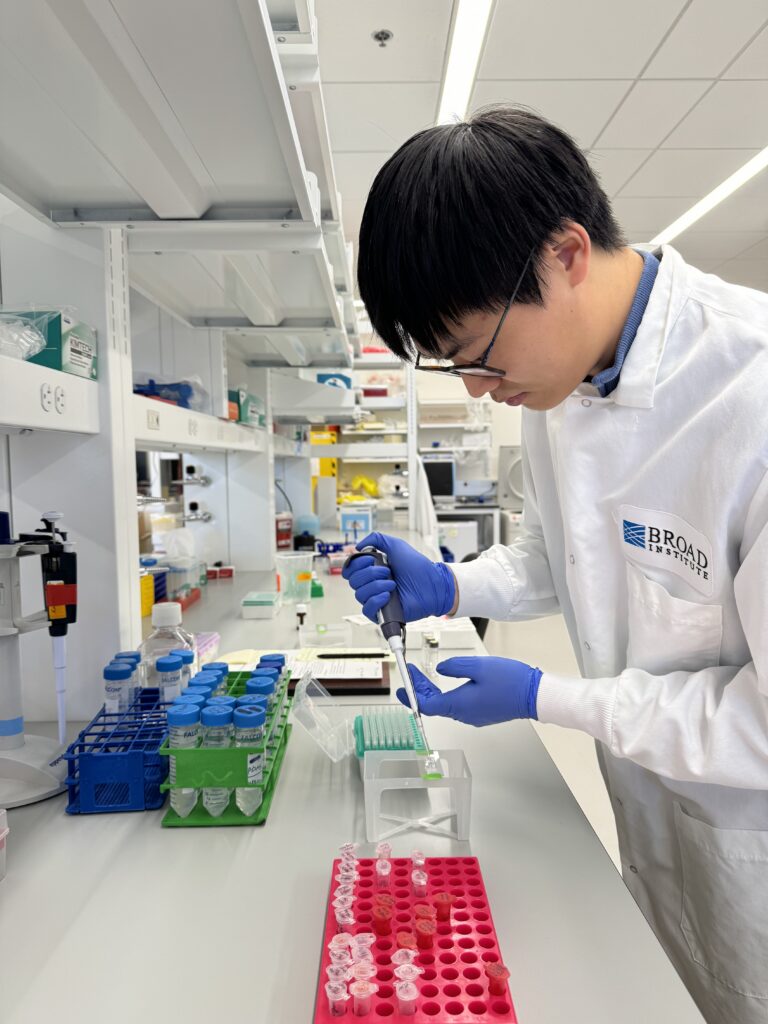
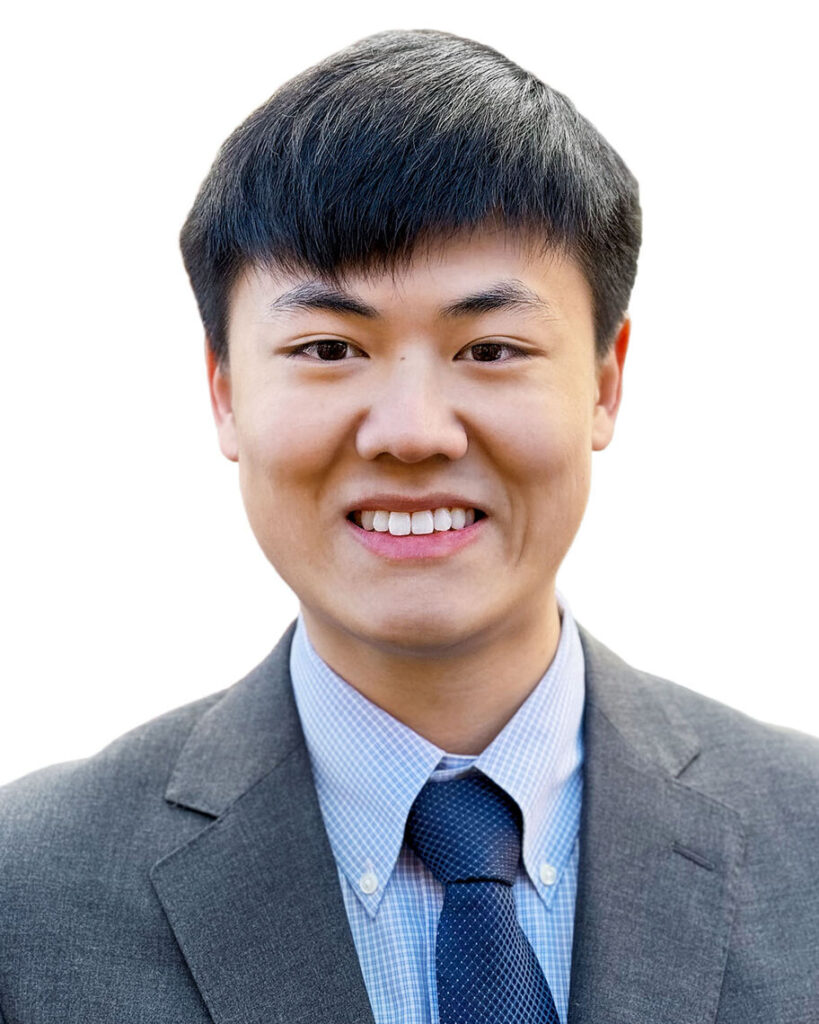
Born in Kaifeng, China, 2024 Paul & Daisy Soros Fellow Zijian (William) Niu immigrated to the United States when he was eight years old. Growing up, seeing his parents sacrifice their careers and face immense hardships—including his mother’s battle with cancer—Zijian found refuge in his education, developing a resilience that fueled his fascination with the complexity and fragility of biological systems.
Zijian became captivated by computational biology and biophysics because of their power to accelerate biomedical discovery through computation. While studying biochemistry, biophysics, and physics at the University of Pennsylvania, he pursued his passion for research and education by developing deep learning algorithms for biomedical image analysis, co-founding a science communication initiative called Project Lucid, and graduating as a Barry M. Goldwater Scholar. Zijian is pursuing a PhD in computational and systems biology at the Massachusetts Institute of Technology (MIT).
How has your experience as an immigrant shaped the questions you ask in your work or the way you move through the world?
I immigrated to the United States from China when I was only eight years old. That transition taught me to see change not only as disruption but also as possibility. In many ways, moving to the United States meant trading stability and familiarity for uncertainty and opportunity, but it also placed me in an environment where I felt encouraged to explore, ask questions, and shape my own path. That experience still guides the way I think and act as a scientist: I am drawn to open-ended problems, to fields that require crossing boundaries, and to moments when uncertainty can become a source of discovery rather than fear.
What drew you to the field you’re pursuing? Was there a moment when you knew this was the right direction?
I was first drawn to biology in high school by the sense that living systems are governed by an extraordinary hidden logic, with proteins, DNA, RNA, and countless other molecules interacting in ways that can seem overwhelmingly complex at first. Over time, I became fascinated by the possibility that this complexity could be made understandable through the right combination of experimental approaches and quantitative tools. My undergraduate research affirmed that this was the right direction for me: I saw how the new computational methods I was developing could uncover patterns in cells that would otherwise remain invisible. Since then, I have been motivated by the idea that better ways of measuring and interpreting biological systems can transform the questions we are able to ask about life and disease.
What question or problem is at the center of your work right now?
I am currently developing technologies that can read out the identities and locations of protein molecules directly inside cells and tissues. Proteins are the molecular machines that carry out most of life’s essential functions, yet we still lack a comprehensive way to see all of them at once in their native cellular environment. I think of my goal as building a protein-level map of cells, one that can reveal how proteins are organized, how they interact, and how their functions change in health and disease.
How has your thinking about your work evolved over the past two years? What are you asking now that you weren’t asking when you started?
Two years ago, I was focused primarily on building better computational models to understand biology. However, I soon came to the realization that biology remains deeply data-limited: the experimental measurements we can obtain today capture only small snapshots of the full complexity of living systems. To fully take advantage of modern computational tools, we need richer, higher-quality data that better reflects that complexity. Since then, my work has shifted more toward the experimental side, where I am asking how we can measure biological systems more completely and generate the kinds of data that will result in more accurate models.
Is there a moment from the past two years—a conversation, an event, a realization—that has stayed with you?
An important realization from the past two years has been the value of health and a sustainable life outside of work. I noticed that I often treated ambition as a sprint, especially at the beginning of a new stage, and assumed that success required setting every other part of life aside. Over time, I have come to see that a meaningful and successful career is much more like a marathon. It requires caring for my body, nurturing my relationships, and maintaining a sense of purpose so that I can continue growing and contributing over the long run.
What’s next for you? What are you working toward in the next few years?
I am continuing to pursue my PhD in computational and systems biology at MIT, where I am developing technologies for spatially resolved, single-molecule protein sequencing. With these tools, I aim to map the abundance, location, and interactions of our cellular machinery within intact cells and tissues. In the next few years, I hope to help move this work from a set of promising components into an integrated platform that can answer real biological questions. Longer term, I hope to lead an interdisciplinary research group at the interface of biology, molecular engineering, and computation.
What does success look like to you—in your work, and more broadly?
In my work, success means having the freedom and courage to follow my curiosity toward questions that are challenging, intellectually stimulating, and worth solving. I am driven by a desire to understand how life works at a deeper level, and I hope the tools I build will allow not only me, but also many others, to pursue questions that were previously out of reach. More broadly, success means building a life in which curiosity, impact, and community reinforce one another. I want to turn the opportunities I have been so fortunate to receive into something meaningful for others through science, mentorship, and the people I get to help along the way.
Is there a problem in the world you most want to contribute to solving? What gives you hope that it’s solvable?
The problem I most want to help solve is our incomplete understanding of how life works at the molecular level. Many diseases remain difficult to prevent, predict, diagnose, or treat because we still cannot fully observe the molecular processes unfolding inside our cells or how they change over time. I aim to build technologies that make biology less like a black box so that one day we can understand living systems clearly enough to model them, predict their behavior, and intervene with precision. What gives me hope is that advances in chemistry, physics, engineering, and computation are increasingly converging, giving us unprecedented ways to measure and understand biology at its most fundamental scales.
What would you want a newly selected Paul & Daisy Soros Fellow to know going into the Fellowship?
I would tell them that the PD Soros Fellowship is not only an honor and a source of funding but also an invitation to join a lifelong community. During graduate school, it is easy to become consumed by the immediate demands of classes and/or research, but the people in this Fellowship are worth making time for. Some of the most meaningful parts of my PD Soros experience have come from hearing how others have navigated their own New American journeys, learning about the fascinating work they are doing now, and seeing the different perspectives they bring to shared questions and challenges.
What advice would you give to an applicant who is on the fence about applying to the Fellowship?
Just go for it, even if your story still feels unfinished. When I began my PD Soros application, I could not imagine that I would ultimately receive the Fellowship, but I saw it as a rare opportunity to reflect on where I came from, what my journey had made possible, and what I hoped to build with that opportunity. There is no single mold you need to fit. One of the greatest strengths of the PD Soros Fellowship is that it recognizes the many different forms a New American story can take.
Keep Exploring
-
 Read more: PD Soros Fellow Hilda Huang: A Voice Across Centuries
- Fellow Highlights
PD Soros Fellow Hilda Huang: A Voice Across Centuries
-
 Read more: Musicians: Applying for the PD Soros Fellowship
- Applicant Information
- Fellow Highlights
- Music
Musicians: Applying for the PD Soros Fellowship
-
 Read more: Writers: Applying for the PD Soros Fellowship
- Applicant Information
Writers: Applying for the PD Soros Fellowship
-
 Read more: Q&A: JD Student Ananya Agustin Malhotra Looks Back At The Fellowship
- Fellow Highlights
Q&A: JD Student Ananya Agustin Malhotra Looks Back At The Fellowship