- Fellow Highlights
Q&A With Chemistry PhD Student Minjung Kim
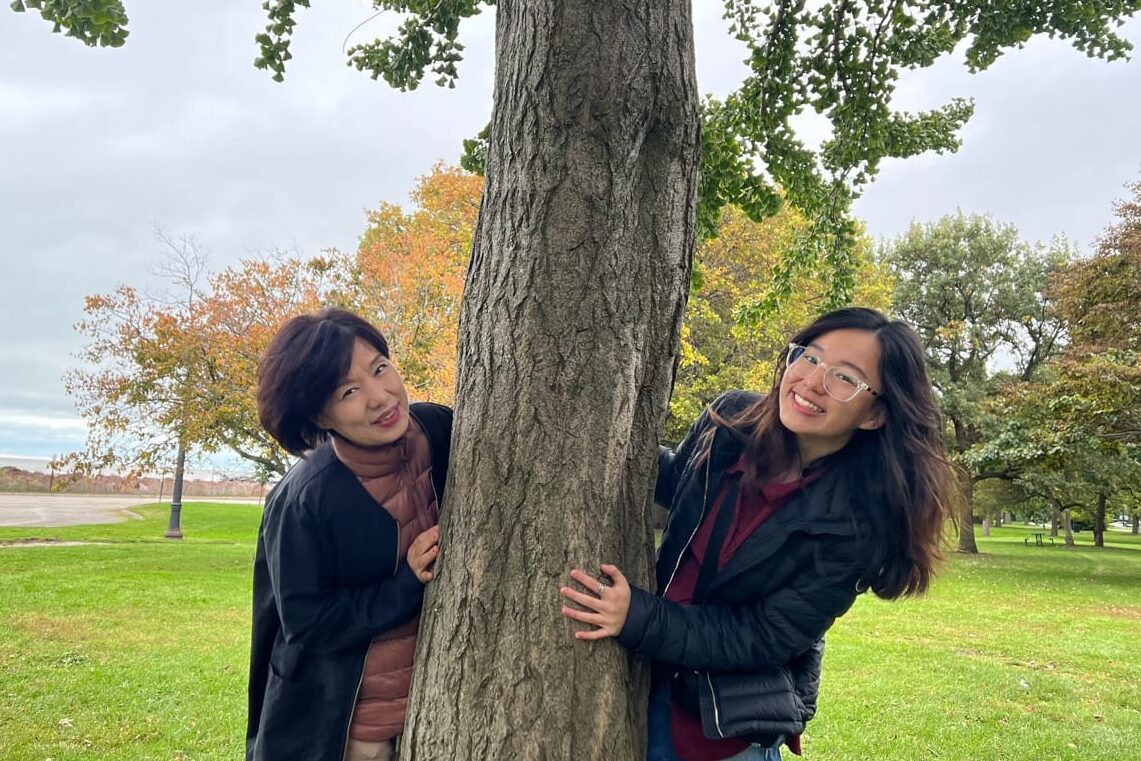
Born in Seoul, South Korea, 2024 Paul & Daisy Soros Fellow Minjung Kim immigrated to the United States when she was seven years old. Growing up, she developed a strong interest in music—performing the piano, gayageum, and cello with aspirations of becoming a professional cellist. However, it was a high school lesson on the chemistry of cooking rice that first showed her the field’s fundamental connection to real-world processes, inspiring her to instead channel her creativity into the sciences to understand how the world works and invent creative solutions to societal problems.
Minjung became captivated by chemical engineering and chemistry because of their power to address the world’s most pressing environmental challenges. While studying chemical and biomolecular engineering and chemistry at Rice University, she pursued her passion for research and sustainability by identifying the role of gold nanocluster species in creating uniform plasmonic nanorods, spearheading a first-place award-winning project to destroy “forever chemicals” in water, and graduating with honors and the National Science Foundation Graduate Research Fellowship (NSF GRFP). Minjung is pursuing a PhD in chemistry at Northwestern University.
How has your experience as a New American shaped the questions you ask in your work or the way you move through the world?
Being an immigrant means that you have to be this bridge between different cultures, languages, and identities. This also means that you have to be a really good communicator—specifically, a creative one. Having had to translate a lot growing up, I used a lot of analogies and anecdotes that would help me convey the message. I see myself doing this a lot in my scientific work—I always see how I can creatively “translate” the jargon into something that can be easily understood.
What drew you to the field or path you’re pursuing?
I have always loved science as a kid (shoutout to my parents for nurturing my curiosity and passion for learning) and so I always imagined myself being in STEM. What helped me narrow it down was my AP chemistry class in high school—my teacher would explain everyday phenomena with such intriguing chemistry concepts that I just fell in love with the field—a field that could answer just about any questions I had about how the world works. But the moment when I knew this was the right direction was in undergrad when I met my general chemistry professor. I would not be in grad school without his guidance. He let me ask many, many chemistry questions in countless office hours and at the end of every office hour I left knowing with greater confidence that I chose the right field.
What’s a failure, setback, or detour that ended up mattering more than you expected?
My first PhD project didn’t work out as intended. During that journey, I ran into a lot of challenges and had to pivot pretty significantly. It almost felt like I was restarting. But this ended up being a very valuable lesson for me—learning how to pivot and quickly picking up new skills to start a new project made me a stronger scientist and was the lesson I needed to learn both in science and in life.
How do you describe the Paul & Daisy Soros Fellowships for New Americans to someone who hasn’t heard of it?
From the very beginning we are told that this is a “Fellowship with a Heart” and it has been very true to the core. The financial support is amazing, but the community that you join is truly invaluable. A lot of your identity is shaped by your experiences as a New American, and this Fellowship will remind you that this is one of your greatest strengths.
What did the PD Soros Fellowship give you that you didn’t expect?
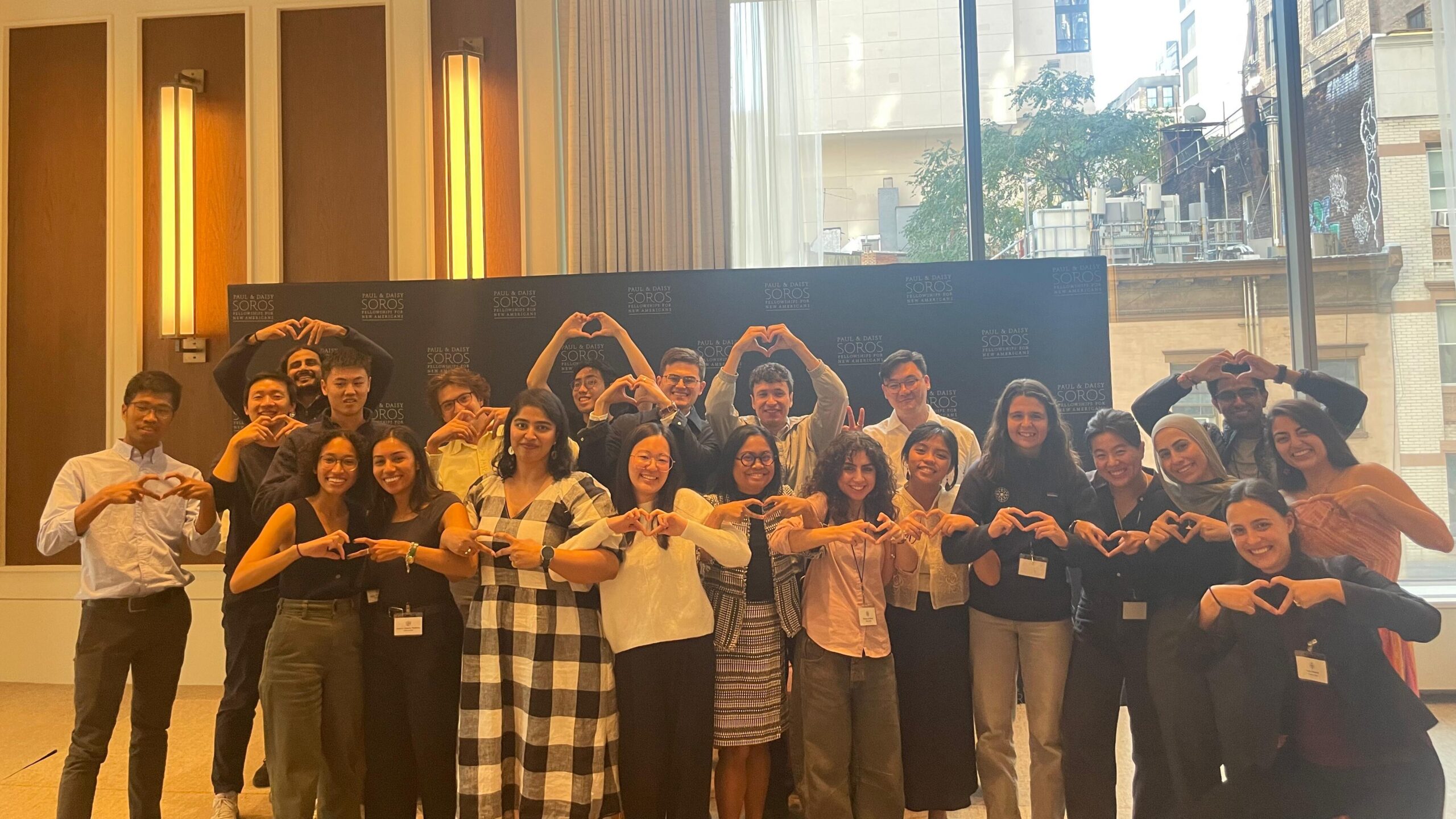
The Fellowship gave me a sense of community beyond what I imagined. I knew going in that we were all accomplished individuals with New American identities and I was so excited to meet everyone at the Fall Conference to learn about these amazing individuals! But what really shocked me was this mutual understanding of our passions, what drives us, and our complicated relationship to this world as New Americans—that we didn’t have to justify our perspectives and that our existence was effortless in this shared space, and reminded me how much I was longing for a community like this.
Is there a moment from the past two years—a conversation, an event, a realization—that has stayed with you?
The quick conversations while walking through NYC to the late night talks in the hotel lobby to the conversations at the airport security line—I still think about them from time to time. In a short span of time we went from being complete strangers to sharing our deepest secrets and worries with each other; that’s very special. They stayed with me because it reminded me that we are all people living for the first time, and that I have found my people!!
What’s a friendship or connection from the Fellowship that has meant something to you?
I have so much love for the Fellows that I met especially at the first Fall conference—this was around the most difficult time in my life, and the love and sympathy that they have given me helped me learn that you grow beyond your hardships and that life can be beautiful. I had a lot of complex emotions surrounding my identity but they helped me feel seen, understood, and cared for in a way that it’s really hard to explain.
What’s next for you? What are you working toward in the next few years?
Next up is graduation! I have about a year left in my PhD program, so right now I am at the final sprint of wrapping up my projects. I’m working towards finding a stable career that I am passionate about and hopefully buying a house!
What would you want a newly selected PD Soros Fellow to know going in?
Welcome to the family! You’ll feel instantly close with everyone that you’ll meet through the Fellowship because you all have your New American identity in common and that in itself is a beautiful experience. Talk to as many Fellows as you can and stay connected beyond your Fellowship years!
What advice would you give to an applicant who is on the fence about applying?
Just do it!! The application process itself is very special—you get to reflect back on all the parts of you—the most joyful, painful, and meaningful parts—it’s a rare opportunity to be able to do that. Writing your experiences down on paper really transforms your outlook on life and your place in this world and honestly the application itself may be tough but you will grow so much in the process.
Keep Exploring
-
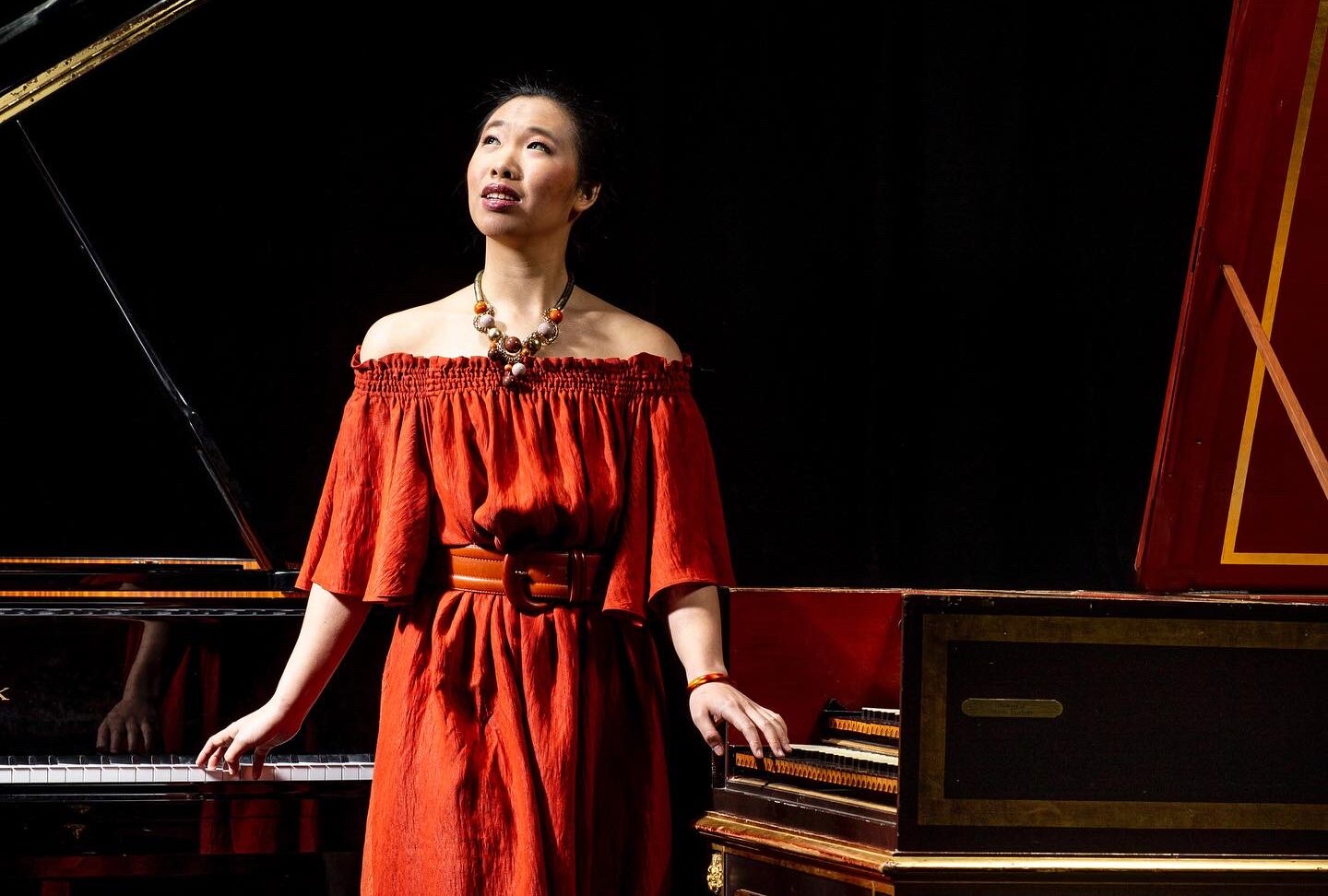 Read more: PD Soros Fellow Hilda Huang: A Voice Across Centuries
- Fellow Highlights
PD Soros Fellow Hilda Huang: A Voice Across Centuries
-
 Read more: Musicians: Applying for the PD Soros Fellowship
- Applicant Information
- Fellow Highlights
- Music
Musicians: Applying for the PD Soros Fellowship
-
 Read more: Writers: Applying for the PD Soros Fellowship
- Applicant Information
Writers: Applying for the PD Soros Fellowship
-
 Read more: Q&A: JD Student Ananya Agustin Malhotra Looks Back At The Fellowship
- Fellow Highlights
Q&A: JD Student Ananya Agustin Malhotra Looks Back At The Fellowship